
Work trousers that suit electricians on busy UK jobs
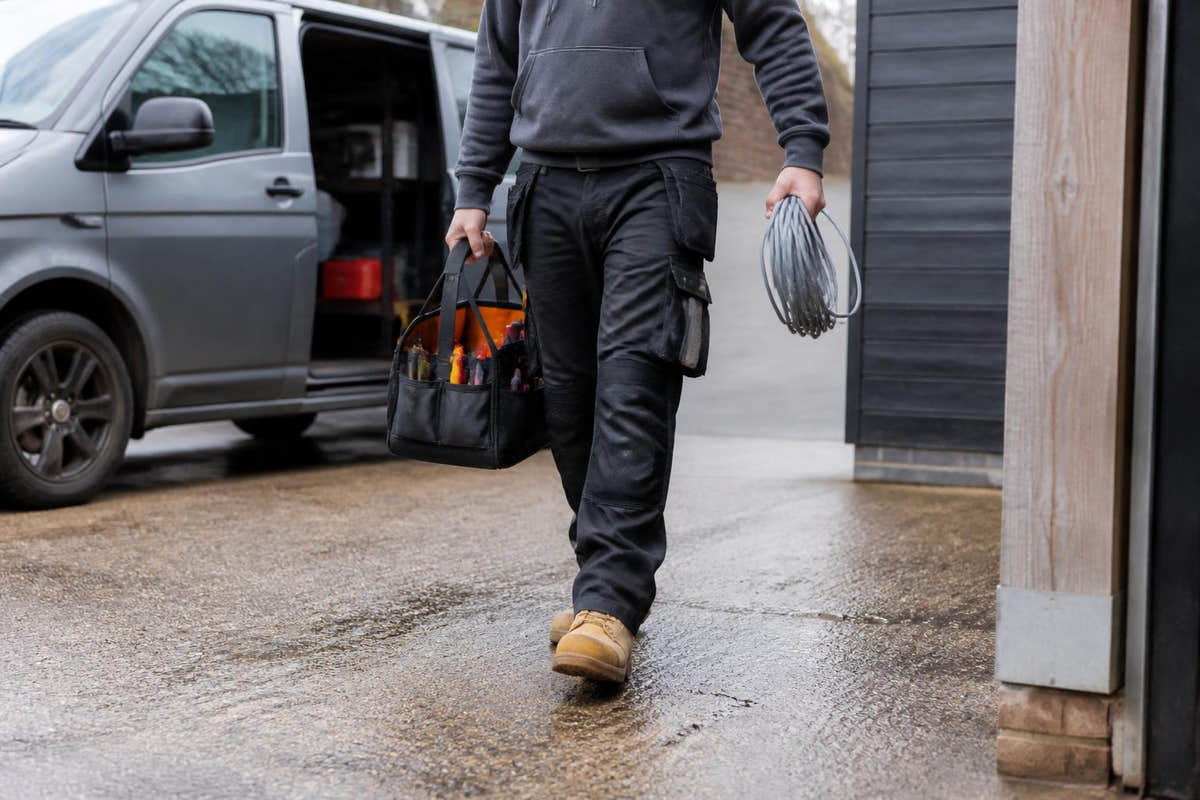
If you are comparing the best work trousers for electricians, start with the job rather than the brand. On busy UK sites, the right pair needs to let you climb, kneel, reach and carry small tools without catching on tray, conduit, studs or board stacks. Electricians usually need a cleaner pocket layout than joiners or groundworkers, enough storage for testers, pens, fixings and a phone, but not so much bulk that the trousers feel heavy or snag in tight spaces.
The other point is that electrical work varies more than people think. First fix, second fix, maintenance, testing, plant room work and commercial fit-out all place slightly different demands on trousers. That is why we always suggest checking the exact fabric, cut, pocket arrangement, kneepad design and care details on the live product page before buying, rather than assuming one style will suit every job.
What electricians need from work trousers
For most electricians, movement comes first. You spend the day stepping over materials, crouching at socket height, climbing steps, kneeling to work low level, and reaching overhead to route cable or fit containment. Work trousers that feel fine when standing in a changing room can become restrictive once you are bending and twisting all day. Stretch panels or a fabric with some give can make a real difference here, especially through the seat, crotch and knees.
Pocket access is the next big point. Electrical work often involves lots of small, frequently used items rather than a few larger hand tools. Insulated screwdrivers, side cutters, a marker, a voltage tester, tape, connector blocks, screws, clips and rawl plugs all need a place. What matters is not just pocket count, but whether you can reach those pockets easily while kneeling, on steps or working in a ceiling void. Deep side pockets, secure back pockets and a dedicated phone pocket are often more useful than a trouser covered in extras you rarely use.
Kneeling comfort matters for obvious reasons. Socket work, trunking runs, under-counter jobs and plant room tasks can mean repeated kneeling on hard floors. Trousers with kneepad pockets can help, but only if the pocket position suits your height and the opening holds the pad securely. A badly placed kneepad can be nearly as annoying as no kneepad at all. If kneeling is a regular part of your day, check both the kneepad pocket design and the shape around the knee, because a reinforced knee alone is not the same thing as proper kneepad compatibility.
Avoiding snagging is another priority that gets overlooked. Electricians often work around exposed edges, cable baskets, threaded rod, ladder feet and stored materials. Oversized external pockets, loose flaps and bulky trims can catch where a cleaner-cut trouser would pass through. That does not mean every electrician needs a slim fit, but it does mean the least practical trousers are often the ones trying to do every trade at once.
Fabric durability still matters, just in a slightly different way from bricklaying or civils. You may not be grinding against brick all day, but repeated kneeling, contact with floors, contact with sharp metal edges and constant washing all wear trousers out. Reinforced panels in high-wear areas can extend the life of the garment, provided they do not make the trouser stiff or hot.
Finally, think about site requirements. If your work includes rail, highways, utilities or larger commercial sites, you may need hi-vis trousers or other site-specific clothing as part of your PPE. In the UK, site rules can be stricter than the minimum legal baseline, so always buy for the environments you actually work in, not just the workshop or van.
How to compare styles without buying the wrong pair
The easiest mistake is to buy by appearance alone. A trouser can look hard-wearing online and still be wrong for electrical work if the cut is awkward, the pockets are too bulky, or the fabric is too heavy for indoor fit-out work.
Start with the fabric. Stretch fabrics are usually the easiest option for electricians because they help with movement during kneeling, climbing and crouching. The trade-off is that some stretch styles are lighter and may not suit rougher site conditions if you are constantly brushing against sharp edges. More traditional fabrics can feel tougher and more structured, but may need a roomier cut to avoid restricting movement. If you are weighing fabric types, our guide on choosing between ripstop and twill work trousers is a useful place to compare how different constructions behave in everyday use.
Then look at reinforced panels. Reinforcement at the knees, hems and other wear points can be worthwhile, especially if you spend time kneeling on concrete or unfinished floors. What you want to avoid is reinforcement that adds bulk in the wrong places. If the knees are stiff, or the fabric bunches behind the leg, you can end up less comfortable by mid-afternoon than you would be in a simpler pair.
Holster pockets divide opinion for good reason. Some electricians like them for first fix and install work because they keep fixings and hand tools close to hand. Others find they swing, catch and get in the way when working in tighter spaces or when getting in and out of a van. If you regularly work off steps, in risers, under desks or in ceiling voids, holster pockets can be more nuisance than help. If your work is more open-site installation with constant tool access, they may earn their keep. There is no universal answer, so match the style to the actual job.
Cut matters as much as features. Slim trousers can reduce snagging and often feel tidier for second fix and service work, but only if they still leave enough room through the thigh and knee. Regular cuts are often more forgiving over long days, particularly if you layer thermal basewear underneath in winter. The best approach is not to chase either label, but to check whether the shape gives you clean movement without excess fabric.
Seasonal comfort is another area where people buy the wrong pair. Heavier trousers can be useful on cold sites, but many electricians spend long periods indoors, in plant rooms, commercial refurbishments or occupied buildings where overheating becomes the bigger problem. A lighter trouser may be the better everyday option, with a thermal layer, fleece, softshell or bodywarmer added when needed. If your work moves between indoor and outdoor jobs, layering is usually more flexible than relying on one heavy trouser all year.
Pocket layouts that actually help on electrical jobs
A good electrical trouser does not need the highest possible number of pockets. It needs the right ones, in the right places.
For most electricians, the basics are straightforward. You want front pockets that are easy to reach and deep enough for everyday items. A secure phone pocket is useful, especially if you use your phone for job sheets, plans, photos or test records. Pen slots are worth having if they actually hold a marker or pen firmly and do not force it into your leg when kneeling. A ruler pocket can be useful for some, but many electricians will get more value from a slim utility pocket that takes a small tester, insulated screwdriver or torch.
Small fixings storage matters too. If you are constantly carrying clips, screws, grommets, wall plugs or connector accessories, one or two dedicated pockets can save time. The problem comes when storage spreads too far around the leg. Bulky side pockets can make the trouser swing when loaded, knock against steps, or catch on materials. Too many external compartments can also encourage carrying more than you should, which makes the whole garment heavier and less comfortable.
Back pockets are often less important than buyers think. They are useful for paperwork, gloves or occasional storage, but anything you need regularly should be accessible without twisting or standing up from a kneeling position. For that reason, side access and upper leg storage usually matter more than rear storage on electrical work.
Holster pockets deserve a second look here because their usefulness depends entirely on the task. They can be excellent for repetitive install work where you need screws and hand tools in constant rotation. They can be irritating for fault-finding, maintenance and finishing work where you are moving through tighter spaces and carrying less. Some tradespeople like tuck-away or removable options for that reason, but the key point is to avoid paying for a feature you will spend half the week wishing was not there.
A final practical tip, think about what you already carry elsewhere. If you normally keep larger tools in a pouch, tote or organiser, your trousers do not need to replace that system. In many cases, the best work trousers for electricians are the ones that support your tool setup without trying to become a tool bag themselves.
Fit, inside leg and kneepad compatibility
Fit is where a lot of good trousers fail in practice. If the waist is too tight, you lose comfort the moment you crouch or bend. If it is too loose, the trouser drops when pockets are loaded and the knee area shifts out of place. Start with your real working waist, not the size you hope to be and not a denim size from another brand that happens to fit differently.
Inside leg matters just as much. A trouser that is too long will stack at the ankle, wear faster at the hem and can interfere with boots. Too short, and the knee articulation or kneepad pocket may sit too high. That is especially important if you rely on built-in kneepad pockets. We always recommend checking the stated inside leg options on the live product page and choosing the one closest to your actual booted working fit, not just what you wear in casual trousers.
If you are unsure about shape as well as size, our guide on how work trousers should fit in practice helps you judge waist, seat, thigh and leg fit in working positions rather than just when standing still.
For kneepad compatibility, check three things before you rely on the trouser for regular kneeling work. First, confirm the trouser actually has kneepad pockets rather than simply reinforced knees. Second, check how the kneepad is inserted and secured. A loose or awkward opening can become frustrating very quickly. Third, think about where the pad will sit on your leg during movement. A kneepad pocket that lines up while standing can shift once you kneel, especially if the inside leg or overall cut is wrong for you.
In the UK, kneepads used as part of PPE need to be considered properly rather than treated as an afterthought. Site expectations and risk assessments may differ from one contractor to another, and where knee protection is required you should make sure the trouser and kneepad combination is suitable for the work. That is more important than simply choosing any trouser with a knee pocket.
Do not ignore care, either. Regular washing affects fit, water repellency treatments and the life of reinforced sections. Before buying, it is worth checking the washing instructions so you know whether the trouser suits your actual working week. Our guide on washing work trousers without ruining the fit covers the basics that help trousers last longer and stay comfortable.
How to choose from the live 100 Percent Workwear range
The most reliable shortlist method is simple, and it works well across our live 100 Percent Workwear range.
First, go straight to our current work trousers collection and filter with the job in mind. For electricians, start by excluding anything obviously aimed at much heavier ground or wet trade use unless your own work really overlaps those conditions. Then look for styles with clear movement features, sensible tool storage and, if needed, kneepad pockets.
Second, open the product pages and read the specifications line by line. We recommend checking fabric composition, whether stretch is built in, where reinforcement is used, whether holster pockets are present, what colour options are published, and which waist and inside leg sizes are currently listed. Do not assume a style comes in your size or preferred length just because the product exists in the range. Availability can vary by option.
Third, compare the pocket layout against your actual daily carry. Make a short list of what you need on your person, for example phone, pen, marker, small screwdriver, tester, tape and a small amount of fixings. If a trouser has no sensible place for those items, it is probably the wrong style. If it has so many external pockets that you can already see them catching on access equipment or interior fit-out, it is probably the wrong style as well.
Fourth, check care details before you buy. Electricians often wash workwear frequently because of dust, adhesive marks, general site dirt and the need to keep a presentable appearance on occupied premises. A trouser that only performs well with delicate treatment may not suit everyday trade use. The live product page should always be your reference point for care instructions.
Fifth, think about what you wear with the trousers. If you need extra warmth for early starts or outdoor work, layering often makes more sense than choosing the heaviest trouser in the range. Depending on the season and site, that may mean adding a fleece, softshell or bodywarmer. If your work includes roads, utilities or controlled sites, you may also need compatible hi-vis clothing for site-compliant layering.
Finally, buy for the majority of your jobs, not the odd exception. If 80 per cent of your work is indoor commercial fit-out and maintenance, choose a trouser that excels there, then add separate weather or visibility layers when needed. If most of your work is first fix on open sites, you may lean more towards reinforcement and tool access. The right choice is the one that suits your real working pattern.
At 100 Percent Workwear, operated by Fleeta Limited, that is how we suggest narrowing the field. Check the live specification, check the fit options, check the care instructions, and match the features to the work you actually do. That is the simplest way to end up with work trousers that help on site rather than just looking the part online.
Are holster pockets useful for electricians?
They can be, especially for fixings and frequently used hand tools, but they are not ideal for every job. On tight indoor work or snag-prone areas, a cleaner pocket layout may be more practical.
Should electricians choose stretch work trousers?
Often yes. Stretch panels or stretch-rich fabrics can make ladder work, crouching and floor-level tasks easier. The trade-off is that some heavier non-stretch styles may feel tougher for rougher site conditions.
Do all work trousers take knee pads?
No. Some have dedicated kneepad pockets, some do not, and pocket design varies by brand and style. Check the exact live product specification before assuming compatibility.
Are heavier work trousers always better?
Not necessarily. Heavier fabrics can improve abrasion resistance, but they may feel hotter and less flexible. For many electricians, balanced durability and movement matter more than simply choosing the thickest fabric.
Can work trousers count as PPE?
Only if the exact product is certified and described as such. Everyday work trousers should not be treated as PPE unless the manufacturer states the relevant certification and it suits the job risk assessment.