
Waterproof work boots: compare water resistance, grip and fit
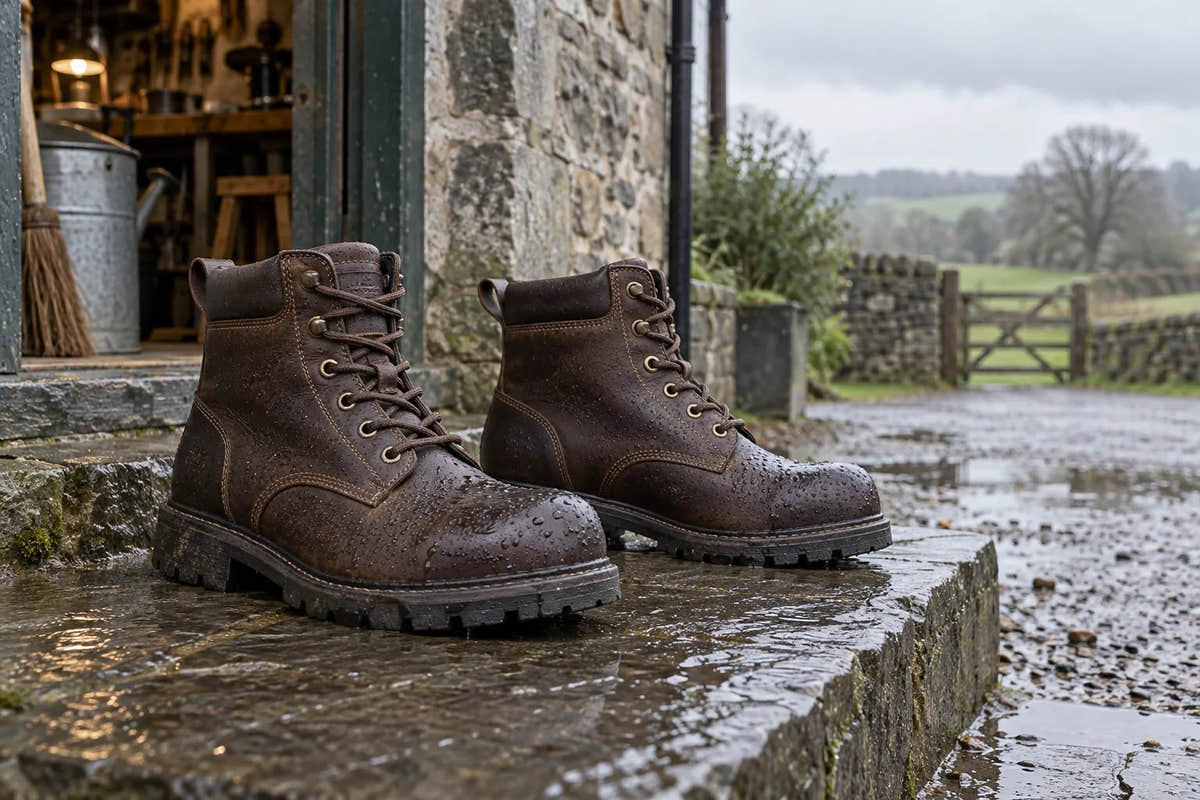
A boot that suits a brief walk across a damp yard may not be the right choice for a day spent in wet ground. Describe the conditions first: where you walk, how long the exposure lasts, the surfaces underfoot and any other protection the work requires. Then compare the exact model's information.
Keep three questions separate while shopping: how does the footwear deal with water, what grip evidence is relevant to the workplace, and does it fit comfortably? A positive answer to one does not settle the others.
Check whether the claim covers the upper or the whole boot
Look beyond words such as weather-ready. Uvex's explanation of EN ISO 20345:2022 distinguishes WPA, relating to water penetration and absorption of the upper, from WR, relating to water resistance of the whole shoe. They describe different properties, so do not treat an upper-material claim as proof of the complete boot's performance. Uvex: safety-footwear markings.
Check the standard version and the actual documentation supplied with the model. Ask what conditions the manufacturer recommends it for, and whether there are limitations relevant to your work. A label is a starting point for that conversation, not permission to use the boot in any depth of water or with any substance.
Assess the floor as well as the footwear
Tell the supplier what the sole will meet: outdoor mud, wet smooth floors, oily areas or another specific surface. HSE notes that a shoe which performs well with one contaminant may not suit another, and recommends suitable wearer trials rather than relying only on brochure descriptions. HSE: selecting slip-resistant footwear.
HSE also distinguishes oil resistance from slip resistance: resistance to oil damage is not a promise of grip on an oily surface. Tread condition and cleanliness matter too. Keep those questions separate when reading a long list of sole features.
Try the boots with your normal work socks
Use the maker's size guide and confirm whether the listing uses UK, EU or US sizes. If it provides width choices, compare those rather than assuming that a longer size will resolve a width problem. Try both boots with the socks you expect to wear, on a clean indoor surface.
Fasten them properly, walk, turn and sit down. Pay attention to pressure at the toes, heel movement and how the collar feels. Record the model and size that fit; relying on the number alone makes the next purchase harder when another brand uses a different shape.
Confirm the complete work specification
Water resistance is only part of the decision. HSE identifies a range of foot hazards and advises choosing footwear for the risks involved. Where the work requires specific toe, underfoot, electrical or other protection, verify those documented features separately. HSE: foot and leg protection.
Read the care instructions and decide where the boots will be cleaned, stored and dried. Keep a record of visible wear or damage and follow the manufacturer's replacement advice. Adding an unapproved insole or changing the footwear should not be assumed to preserve its original specification.
Compare safety boots by their documented features and fit. If the job also needs an outer layer, use our hi-vis buying checklist to review the outfit as a whole.