
How to choose work shorts that still move with you
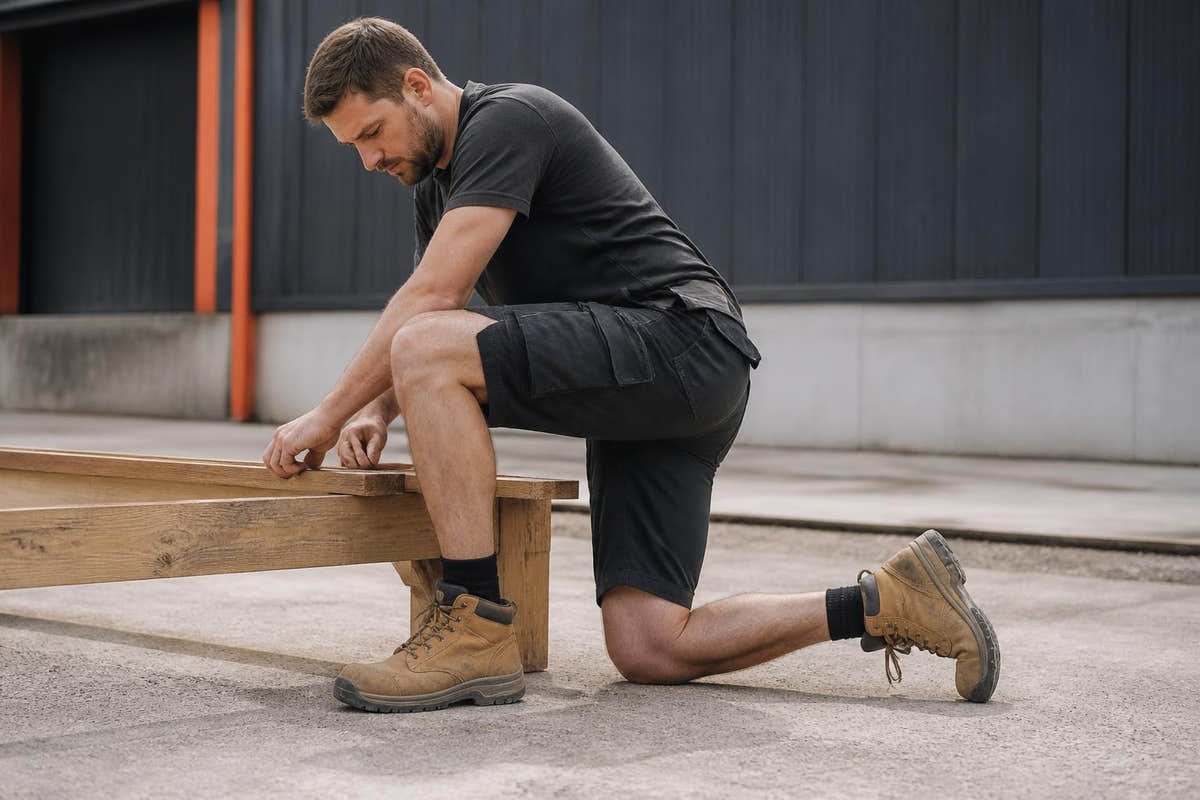
Choosing work shorts that move properly comes down to three things, fabric, fit and layout. A good pair should give through the seat and thighs when you crouch, stay comfortable at the waist when you bend or drive, and carry what you actually use without swinging about or digging in. If the shorts only feel right when you are standing still in a fitting room, they are not the right shorts for work.
For most trades, the best men’s stretch work shorts are not the stretchiest pair on the rail. They are the pair with enough flex in the right places, a cut that suits kneeling and climbing, and build details that hold up to repeated washing and site use. Here is how we suggest comparing them on 100 Percent Workwear.
What stretch work shorts actually do better
Stretch in work shorts is useful because it reduces restriction during ordinary site movement. That matters more than headline claims. Most people notice the difference when stepping up into a van, kneeling to fix at low level, climbing ladders, carrying boards, or spending part of the day driving between jobs.
The fabric itself is only part of it. Shorts can have some mechanical stretch from the weave, or added elastane for extra give, but the cut matters just as much. If the pattern is too tight through the seat or too flat across the front rise, even a stretch fabric will still pull when you crouch. Equally, a well-cut pair with modest stretch can feel easier to work in than a very stretchy pair with a poor shape.
Flexible panel design helps for the same reason. Some work shorts are built with articulated areas or extra give where movement starts, usually around the seat, crotch or upper thigh. That can make them feel less restrictive through a full day, especially if your work alternates between walking, lifting, kneeling and getting in and out of a vehicle.
Comfort is the other main gain. Work shorts that move with you tend to rub less at stress points and feel less stiff by the end of the day. That is particularly useful in warmer weather when heavy fabric and tight seams become more noticeable. For UK tradespeople, that often means spring and summer use, but also indoor work such as warehousing, fit-out, workshops and plant rooms where heat builds up quickly.
What stretch does not do is turn ordinary work clothing into protection. Shorts can improve freedom of movement and general comfort, but they do not replace task-specific PPE. If the job calls for leg protection, abrasion resistance beyond ordinary clothing, or visibility requirements, that decision sits with the task risk assessment and site rules, not with how comfortable the shorts feel.
How to get the fit right for work, not just for standing still
The quickest way to judge fit is to stop thinking about how the shorts look when you are upright and relaxed. Think about the positions you actually work in. Bend, crouch, bring one knee up, sit down, and imagine a day of climbing in and out of a van.
Start with the waist. For work, the waistband should sit securely without needing a belt pulled excessively tight. If it only stays up when cinched hard, the cut is probably wrong. Too tight at the waist becomes obvious when bending forward or sitting in the cab. Too loose and the shorts shift under load once the pockets are filled. A small amount of waistband give can help, but it should not be doing all the work.
Seat fit is where many shorts fail. You want enough room across the back that the fabric does not strain when you squat or step up. If the rear pockets pull apart, the centre back dips too low, or the fabric feels tight across the glutes, go up a size or change the cut. Stretch helps here, but only to a point.
Thigh room matters more than many buyers expect. Tradespeople who kneel, climb, carry or walk all day usually need more ease through the upper thigh than casual shorts provide. If the leg binds high up when you lift a knee, the shorts will feel worse after a few hours, not better. A slightly cleaner fit lower down the leg is fine, but the top of the leg must allow movement.
Pay attention to the rise. A short front rise can feel neat when standing, then become uncomfortable the moment you crouch. A better work cut gives enough depth through the body so the waistband stays in place when you bend and the shorts do not dig in. This is one of the biggest differences between shorts made for work and shorts made for general casual wear.
Leg length is practical, not just personal preference. Very short legs can feel cooler, but they may ride up more when kneeling or climbing. Longer legs often give better coverage and a more stable feel, especially if you carry tools in side pockets. If you already know the inside leg that suits you in work trousers, use that as a reference point for how you like garments to sit on your body, even though shorts are obviously cut shorter overall.
As a final check, think about what you wear with them. A belt, loaded pockets, kneepads in trousers on other days, and heavier work socks all affect how you judge comfort. If you are comparing shorts with other summer kit, it can help to look across the rest of your clothing system too, especially if you rotate between shorts, hi-vis layers for site work, and lightweight tops depending on the day.
Which fabrics and build details are worth paying for
The best fabric choice depends on how hard you are on your clothing, how warm the job runs, and whether you want a softer handle or easier care.
Cotton-rich shorts usually feel more natural against the skin and can be more comfortable in warm conditions. They are often a good choice for general trade work where comfort is the priority. The trade-off is that pure or mostly cotton fabrics can take longer to dry and may show wear differently over time.
Polycotton blends are common in workwear for good reason. They tend to be easier to wash, quicker to dry than cotton-rich options, and practical for repeated weekly use. For many buyers, polycotton hits the middle ground between comfort, durability and straightforward care. If your shorts are going through frequent laundering, this blend is often worth considering.
Stretch blends add flexibility, usually by mixing cotton or polycotton with a small amount of elastane. That extra fibre is what gives the garment more freedom in motion, but the amount matters less than the overall construction. A well-made stretch blend should recover its shape reasonably well after movement and washing. If the fabric feels thin or unstable from new, stretch alone will not save it.
Reinforcement is worth paying for where wear actually happens. On work shorts, that usually means stress at the pocket edges, crotch seams, belt loops and side seams. Reinforced areas help most when they are placed where tools, fixings and repeated movement load the garment. Heavy reinforcement everywhere can make shorts feel bulky, so placement matters more than marketing language.
Look closely at stitching. Triple stitching or reinforced stitching at high-stress seams is useful, especially for trades where you are constantly bending, lifting or carrying. Bar tacks at pocket corners, fly openings and belt loops are another good sign. These are small construction details, but they often make the difference between shorts that hold up through a season and shorts that start failing at the same points every time.
Fastenings are easy to overlook. A sturdy zip, secure button or hook fastening, and well-attached belt loops all matter in daily use. Weak front fastenings become frustrating quickly, especially if you are in and out of vehicles or carrying weight in the pockets. Good workwear should feel dependable here, not delicate.
If you want more guidance on hard-wearing pocketed styles specifically, our guide to cargo work shorts that last on site is a useful next step.
What pocket layout makes sense on site
The right pocket layout depends on what you carry all day, not what you might carry once a month. Too few pockets is inconvenient. Too many badly placed pockets can make shorts heavy, unbalanced and awkward when kneeling or driving.
Standard front and rear pockets suit simpler setups. If you mainly carry a phone, keys, tape and a few small items, a clean layout may be enough. Front pockets are quick to access, but they are not always ideal for bulkier objects because items can jab the thigh or shift when sitting down.
Cargo pockets are useful when you need capacity without overloading the waist. They can work well for gloves, fixings, a notebook, or other medium-size items. Placement matters. A cargo pocket that sits too low on the leg can swing as you walk and feel cumbersome on ladders. A neater, higher-set cargo pocket is usually easier to live with.
Ruler pockets are still useful for many trades, even if your tape measure lives elsewhere part of the day. They can also suit slim hand tools or markers, keeping them separate from screws and loose fixings. If you regularly work with a folding rule, pencil and knife, this layout still earns its place.
Holster pockets suit users who need fast access to fixings and tools throughout the day. They can be very practical for joinery, carpentry and installation work, but they are not for everyone. Holster pockets add bulk, can feel excessive for lighter tasks, and may be awkward in tighter working spaces or when driving between jobs. If you do not use them properly, they become extra weight rather than extra function.
Phone storage deserves separate thought now. Many workers carry a larger smartphone than they did a few years ago. A secure, sensible phone pocket can be more useful than an extra generic cargo compartment. Think about whether you need quick access, flap protection, or a zipped option, and whether the phone will sit comfortably when crouching or sitting.
The best test is simple. List the items you carry every day, then decide where each one would live. If two heavy items end up on the same side, or if your phone has to share with sharp fixings, the layout is wrong for your work.
When shorts are suitable and when trousers are the better call
Work shorts are suitable when the job, site rules and weather allow them, and when they do not conflict with safety requirements. For many general trade, delivery, warehouse, workshop and property maintenance tasks, shorts are a practical warm-weather option. They can improve comfort and help with heat management during routine work.
They are not automatically suitable just because it is hot. In the UK, site rules, employer policy and task-specific risk assessment come first. If there is a risk of cuts, burns, chemical splashes, hot works exposure, significant abrasion, or contact with hazardous materials, trousers may be the better call or a specific form of PPE may be required. Ordinary work shorts are work clothing, not protective equipment unless they are specifically certified for a relevant standard.
That distinction matters. PPE has a defined role and, where applicable, a conformity assessment and marking. Everyday work shorts do not become PPE because they are sturdy or have reinforced seams. If a principal contractor, client or employer requires full leg cover on site, that rule applies regardless of comfort.
This is also where UK practice may differ from broader EU assumptions. Since Brexit, product compliance and placing goods on the market can involve UK-specific requirements alongside or instead of EU ones, depending on the product category and where it is supplied. For practical clothing selection on site, though, the important point is simpler, follow current UK workplace rules, the task risk assessment, and current HSE guidance. If the work activity requires more coverage or a certified garment, shorts are not the answer that day.
For roadworks, rail, utilities and other tasks where visibility clothing is mandatory, shorts must also fit the site’s hi-vis requirements if shorts are permitted at all. Many sites will still require trousers. For dirtier, more enclosed or higher-exposure tasks, some workers move away from shorts entirely and into coveralls for full-body site coverage.
A sensible summer kit usually includes both options. Shorts for suitable low-risk tasks and conditions, trousers for everything else.
How to compare options on 100 Percent Workwear
When you compare shorts on 100 Percent Workwear, use the live product page as the final word on what is currently published. Ranges, available sizes, colours, specifications and care instructions can change, so it is always worth checking the current listing before you decide.
Start with the product description and specification. Look for the fabric composition, whether there is stated stretch content, the pocket layout, fastening type and any published reinforcement or stitching details. If a feature is not shown on the live page, do not assume it is included.
Then check sizing carefully. Use the published size options and any brand-specific guidance on the page. If a product includes fit notes, leg details or care points, use those rather than relying on what another brand does. Different cuts can vary more than buyers expect, especially through the thigh and seat.
Care instructions matter more with stretch garments than many people realise. Washing temperature, tumble drying advice and ironing guidance all affect how the fabric keeps its shape. If you are buying for a team, it is worth checking that the care routine fits real working life and your laundry setup.
Also review approved alternatives if the first choice is not right. A similar style with a different fabric blend or pocket layout may suit the job better. That is often a better decision than forcing one pair to cover every task. If you are also planning layering for cooler starts and warmer afternoons, it can help to compare shorts alongside tops, a softshell, or a bodywarmer so the whole kit works together.
As a business run by Fleeta Limited, we keep the store focused on what is actually published. That means checking the live page for current details rather than assuming stock, features or availability. The same applies across the wider range at 100 Percent Workwear. Safety boots, for example, are currently enquiry-only rather than available through online checkout, so it is always worth following the current product and policy information on the site.
If you are weighing up a few pairs, compare them in this order. First, whether the shorts are suitable for the work and site. Second, whether the fit will work in motion. Third, whether the fabric and construction justify the spend. Fourth, whether the pockets match what you carry. That usually leads to a better choice than buying on appearance alone.
The right shorts should feel unremarkable once the day starts. No pulling at the waist, no tightness through the thigh, no tools bouncing around, and no constant readjusting every time you kneel or get in the van. That is what you are looking for when you choose work shorts that still move with you.
Are stretch work shorts better than standard work shorts?
They can be, if your job involves frequent bending, kneeling, climbing or getting in and out of a van. Stretch helps movement, but the cut, fabric weight and pocket design still matter just as much.
Should work shorts fit loose or close?
They should fit securely at the waist with enough room through the seat and thighs to move freely. Too tight restricts movement; too loose can snag, shift under a tool belt or feel awkward when crouching.
Are work shorts acceptable on every site?
No. Some sites, tasks or employers require full leg coverage. Shorts are everyday work clothing, not automatically PPE, so always follow site rules, the task requirements and current HSE guidance.
Do holster pockets make work shorts more useful?
They can do if you regularly carry fixings, hand tools or small kit. If you mostly need a phone, tape and keys, a simpler pocket layout may feel lighter and less bulky.
What should I check before ordering online?
Check the live product page for current waist sizes, fabric composition, care instructions, colour options and any fit notes. That is the safest way to confirm the exact published specification before you buy.