
How to choose black polo shirts that work on site
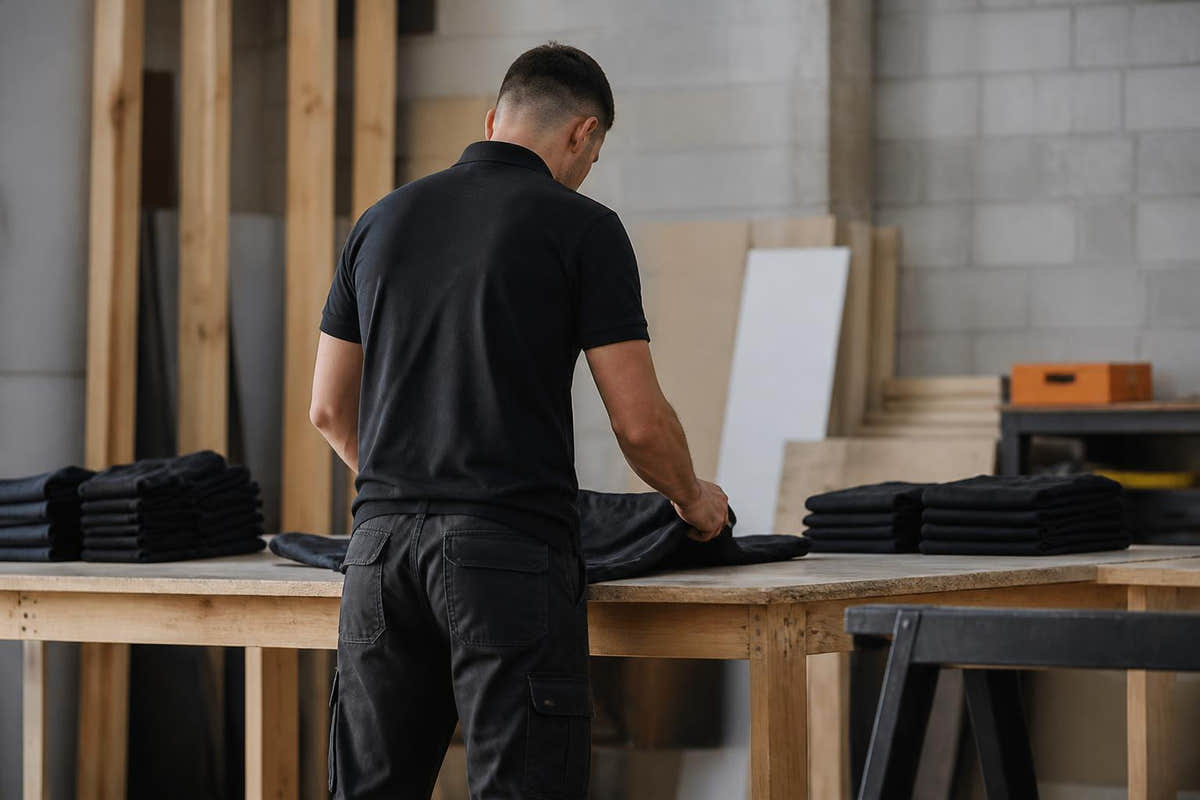
Choosing black polo shirts for site work is mostly about knowing what the shirt is there to do. A good black work polo can give a small team a tidy, consistent look, cope with regular washing, and stay comfortable through driving, lifting and day to day site jobs. It works well for trades who move between customer-facing calls, workshop tasks and van work, provided the job does not call for hi-vis, flame resistant clothing or other task-specific PPE.
The quickest way to judge one is this. Check the fabric and weight first, then the collar, placket, seam quality and body length. After that, think about movement, layering and washing, because a polo that looks fine on a product page can still be wrong if it rides up when you bend, twists after laundering, or fades unevenly across the team.
Why black polos suit many UK work settings
Black polos suit a lot of UK working environments because they sit in the middle ground between a basic T-shirt and a more formal top. For tradespeople, delivery and service teams, workshop staff, counter staff and small businesses that want everyone to look consistent, black is practical for two reasons. It looks smart with very little effort, and it hides day to day marks better than lighter colours.
That matters when your day includes van seats, dusty stores, loading areas, workshop benches and customer properties. A black polo can still look presentable after a morning of normal work, especially when paired with work trousers or shorts in dark grey, black or navy. For sole traders and small teams, it is often the simplest way to create a recognisable uniform without making staff feel overdressed.
Black also works across mixed roles. One person may spend part of the day quoting, part collecting materials, and part fitting or repairing. In that sort of routine, a polo is often more useful than a heavier sweatshirt and smarter than a plain tee. If you are comparing options across our range of work polo shirts, black is usually the safest starting point for teams who want one colour that works in most settings.
That said, black polos are not a replacement for clothing designed around a specific hazard. If the site requires hi-vis, then a black polo is not enough. If the task creates contamination, heavy grease, sparks, chemical exposure or high abrasion, you may be better in a coverall, heavier overshirt or task-specific garment. If the work is outdoors in poor weather, a polo may be the base layer, not the whole answer.
They are strongest in settings such as:
- general trades where branding and presentation matter
- workshop and warehouse roles without mandatory hi-vis requirements at all times
- mobile service teams working from vans
- retail trade counters and trade merchant environments
- small businesses that want one easy uniform across several tasks
They are less suitable as the only upper-body garment for:
- roadside work
- active construction zones with hi-vis rules
- hot works
- contamination-heavy environments
- jobs needing certified protective clothing
In other words, black polo work shirts make sense when the shirt is there to provide comfort, consistency and a professional appearance, but not when it is being asked to do the job of PPE.
What to check before you buy
The first buying point is fabric. Most work polos are either cotton rich, polyester rich, or a blend. A cotton rich polo usually feels softer and cooler against the skin, which many people prefer for indoor work or warmer weather. A polyester rich shirt often dries faster and can hold colour well, which helps when you are washing frequently. A blend can be a sensible compromise for everyday use.
Next is fabric weight. Lightweight polos can feel easier in warm vans, stores and indoor jobs, but very light fabric can show wear faster, especially around the hem, underarms and placket. A midweight polo is often the safer choice for general trade use because it balances comfort and durability. If you need a shirt for harder daily wear, look closely at the published gsm or weight details where they are provided, and compare them with how and where the shirt will actually be worn.
The collar matters more than many buyers expect. A floppy collar can make a shirt look tired quickly, even when it is clean. A firmer ribbed collar tends to hold its shape better through repeated washing. Check the neckline too. If the top button area pulls or sits awkwardly, it can look scruffy and feel restrictive.
Fastening is usually a two or three button placket. There is no universal right answer, but the placket should sit flat and feel secure. Buttons should be stitched on firmly, with no loose threads. It is a small detail, but one that often shows whether the shirt has been made for regular work use or only light casual wear.
Seam quality is another practical check. Look for neat stitching at the shoulders, sleeves, side seams and hem. Areas that come under repeated strain, such as the underarm and side seam, should not look skimpy or uneven. Twisting after washing often starts with poorer construction, so it is worth paying attention before you buy.
Length is important on site. A polo that is too short may look fine when standing still, but it can pull free from the waistband the moment you crouch, climb into the van or reach overhead. A proper work polo should have enough body length to stay put through normal movement.
Sizing needs more thought than simply ordering what you wear in casual clothing. Workwear sizing can vary by brand and cut. Some polos are made for a closer fit, others for a more generous fit that works better over a base layer. Always use the garment measurements and size guide published on the product page, and verify current stock and available sizes before ordering. The same goes for other garments you plan to wear with it, especially if you are matching polos with sweatshirts, fleeces or jackets from the same team order.
If you are buying for a mixed team, do not assume one cut suits everyone. Some wearers need more room across the shoulders, some through the chest or hips, and some need extra length rather than extra width. If that applies in your business, it is worth reading our guide on women’s polos that work on site alongside your main order planning.
Finally, think about ease of movement before colour or branding. A logo looks good only if the shirt underneath works properly on the job.
Getting the right fit for work, not just for standing still
A polo that fits in the mirror can still be wrong for work. The real test is movement. Before you settle on a style, think about what the wearer actually does in it. Driving, carrying, loading, kneeling, reaching into cupboards, climbing steps, leaning over worktops and lifting from floor level all change how a shirt behaves.
Start at the shoulders. The seam should sit close to the natural shoulder line without dragging down the arm or pulling across the upper back. If the shoulders are too narrow, the shirt will feel tight when reaching forward. If they are too wide, the sleeves can sit awkwardly and the whole top may look oversized.
Across the chest and back, you want enough room to move without a lot of spare fabric bunching under outer layers. A shirt that is too tight will strain around the buttons and underarm. One that is too loose can catch when working in tighter spaces and can look untidy under a fleece, sweatshirt or jacket.
Sleeve fit matters too. Very tight sleeves can restrict movement and feel uncomfortable during repetitive tasks. Very loose sleeves can lose shape and look less professional. For active work, the best sleeve is usually one that sits neatly around the upper arm without gripping.
The hem is where many polos fail in real use. Test the length by raising both arms, bending to pick something up, and sitting as if driving. If the shirt rides up at the back or pulls across the waist, go longer or try a different cut. This matters even more if the wearer bends and reaches frequently.
Layering should be planned, not guessed. If the polo will be worn over a thermal or base layer in winter, allow for that in the fit. If it will sit under a sweatshirt, fleece, softshell or waterproof jacket, make sure the collar and sleeves do not bunch. For some teams, the polo is the visible main layer indoors and the base for outerwear outdoors. In that case, the fit needs to work in both situations.
It is also worth checking what the polo will be worn with below the waist. If your team uses work trousers with a higher rise, the length requirement may be different than if they wear lower cut shorts. The same practical thinking applies when ordering trousers by waist and inside leg, or choosing styles with holster pockets for certain tasks. Uniform planning works best when each piece is considered as part of the whole kit, not in isolation.
For colder months, some teams pair polos with a fleece or bodywarmer rather than a heavy coat, especially for van-based work where full waterproofs are not needed all day. If that is your setup, it helps to compare your polo choice with the outer layers you expect staff to wear, such as our bodywarmers and gilets for extra core warmth.
When a black polo is enough and when you need more
A black polo is enough when the job needs ordinary work clothing, not protective clothing. That distinction matters. In the UK, employers and self-employed workers need to assess risks properly and provide suitable PPE where required. Everyday uniform clothing is not a substitute.
If someone is visiting customers, working in a workshop without specific visibility rules, handling stock in a trade environment, or carrying out light fitting and service work in low-risk settings, a black polo may be entirely appropriate. It gives a smart, practical standard without overcomplicating the kit.
But if the work takes place on construction sites, highways, rail environments, waste operations, logistics yards or other places where visibility is a control measure, then hi-vis clothing may be mandatory under site rules or risk assessment. In that case, a black polo is not the right outer layer, no matter how smart it looks. UK requirements are shaped by the task, the environment and the employer’s risk assessment. That is more useful than trying to treat one garment as suitable everywhere.
The same applies to other hazards. A polo is not the answer for:
- arc or flame risk
- welding and grinding exposure
- chemical splash risk
- chainsaw work
- contamination control
- tasks where snagging or abrasion demand heavier protection
Current HSE guidance in the UK focuses on suitable controls for the actual risk. That is the point to keep in mind. The EU framework has many similar principles, but site practice, procurement standards and enforcement are not identical, so UK buyers should work from UK requirements and the specific rules of the site they are attending.
A few practical examples make the distinction clearer.
If an electrician is doing domestic or light commercial visits, mostly indoors, with normal customer contact and no site-wide hi-vis rule, a black polo under a sweatshirt or jacket may be perfectly suitable.
If a warehouse operative works only in a back-of-house stockroom with no moving vehicle exposure and no visibility requirement, a black polo may be fine.
If a plumber is moving between property visits, van travel and merchant counters, a black polo can work well as the daily standard layer.
But if that same plumber signs in to a construction site that requires hi-vis tops, then the polo becomes a base layer only, and the visible outer garment must meet the site requirement. In that situation, our guide on choosing hi-vis T-shirts for site work is the more relevant starting point.
Where contamination or heavy dirt is the issue, a coverall may be the better answer than trying to protect a polo from the job. That is especially true in garages, engineering, decorating prep, messy maintenance and certain agricultural or industrial settings.
The key point is simple. Use a black polo when you need practical branded workwear. Move to hi-vis or other PPE when the risk assessment, the task or the site rules say you must.
Care, washing and replacement planning
Black polos can look excellent in a team uniform, but only if they are cared for properly and replaced before they become visibly tired. Black is forgiving with minor marks, yet unforgiving with fading. Once one shirt starts to go grey while another stays deep black, the difference shows quickly across a team.
Start by checking the care label and product details before you buy. Look for washing temperature guidance, tumble drying advice if any, and whether the fabric is likely to need reshaping after washing. For workwear that will be laundered frequently, these details matter as much as the original fit.
In general, black polos hold their appearance better when washed inside out, with similar dark colours, using the correct detergent amount and avoiding hotter washes than the care label allows. Overwashing at high temperatures can flatten collars, fade the fabric and shorten the life of printed or embroidered decoration.
Avoid judging replacement only by damage. A shirt can still be wearable but no longer presentable for customer-facing work because the collar has curled, the hem has twisted, or the black has dulled. For teams that meet customers regularly, that is usually the point to rotate it out of front-line use.
For small businesses, replacement planning is easier if you order in sets rather than one at a time. A simple approach is to issue enough polos per person to cover the working week with washing in between, then hold a small reserve for starters, size changes and early wear. That helps keep colour consistency closer across the team, because garments bought months apart can vary slightly in shade or finish even within the same line.
It also helps to match replacement timing to the role. Someone in a clean indoor trade counter role may keep polos presentable for longer than someone doing active installation work, loading vans and crawling through dusty spaces. There is no single replacement cycle that fits every business, so build it around the job.
If your team rotates between polos and tees through the warmer months, it can make sense to compare both categories at the same time. In some roles, a polo is best for customer-facing days, while a tee covers hotter back-of-house or workshop tasks. Our work T-shirts for everyday trade use can help with that comparison.
At 100 Percent Workwear, operated by Fleeta Limited, we always recommend checking the current product specification, care details, available sizes and stock position on the live listing before placing a team order. That is the best way to make sure the black polos you choose still suit the job, the wearer and the rest of your workwear system.
A black polo is a straightforward garment, but choosing the right one for site work is not just about colour. Get the fabric, fit, movement and care right, and it becomes one of the most useful items in a working wardrobe. Get those details wrong, and even a smart looking shirt will spend more time being adjusted, replaced or covered up than worn properly.
Are black polo work shirts suitable for all job sites?
No. They suit many everyday work settings, but they are not a substitute for hi-vis or other PPE where the task, site rules or risk assessment require certified protection.
What fabric is best for a work polo?
It depends on the job. Cotton-rich polos can feel comfortable, while polyester blends may dry faster and hold shape well. Check the live product specification before choosing.
Should a work polo fit close or loose?
It should allow easy movement without riding up, pulling across the chest or feeling baggy under layers. Test the fit for reaching, bending and driving, not just standing.
Do black polos fade faster than other colours?
Black can show fading if washed harshly or dried on high heat. Following the care label and rotating several shirts usually helps keep colour more consistent for longer.
How many polo shirts does a small team usually need?
That depends on how dirty the work is and how often kit is washed. For regular weekday use, many buyers plan enough shirts to cover wear, washing and one spare.