
How to choose thermal coveralls for cold outdoor work
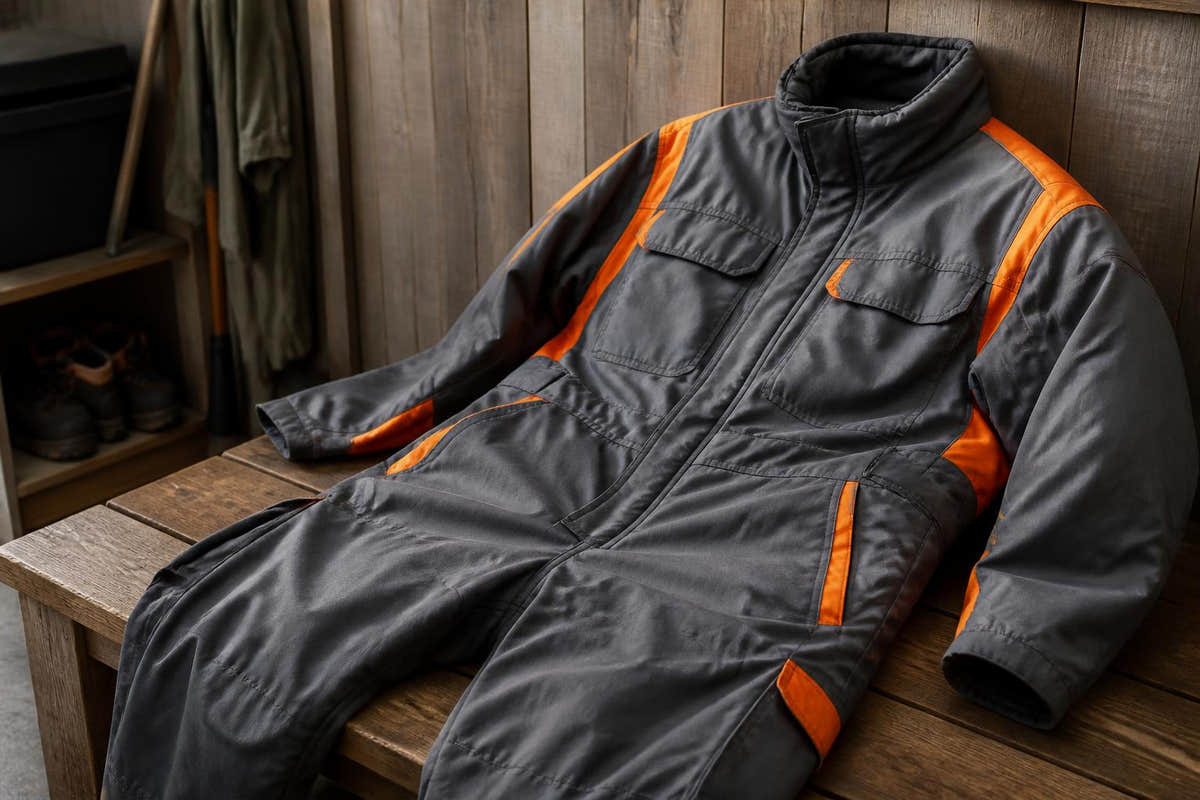
If you work outside through a British winter, the right one-piece can be the difference between getting on with the job and losing time to cold hands, stiff legs and wet clothing. Thermal coveralls make sense when you need dependable warmth over your normal work kit, with less faff than building and adjusting several separate layers through the day.
The key is not simply buying the thickest option. For outdoor work, you need enough insulation for the temperature, wind and exposure you actually face, but also enough movement, access and durability for the job. That means looking at the weather, how active the wearer will be, what has to fit underneath, and whether warmth is only one part of the clothing specification.
When thermal coveralls make sense
Thermal coveralls are most useful when the wearer is exposed to cold for long stretches and cannot easily keep stopping to add or remove layers. In UK terms, that often means early starts, open sites, exposed yards, rural work, roadside work, and winter tasks where wind and damp make the cold feel sharper than the thermometer suggests.
They are a practical choice for jobs such as:
- yard and depot work
- plant operators and forklift drivers moving between cab and yard
- agricultural work in winter
- grounds maintenance
- highways and utilities work
- rail and infrastructure support roles, where the clothing spec allows them
- delivery and logistics work with repeated outdoor loading
- marine and dockside support work
- facilities and estates teams covering large outdoor areas
A thermal one-piece often works better than standard coveralls over separate thermals when the main problem is whole-body heat loss. A jacket can ride up when you bend or climb. Trousers and jackets can leave gaps at the waist. Separate layers also add bulk in different places, which can be awkward if you are getting in and out of vehicles or working in crouched positions. A properly chosen insulated coverall gives continuous coverage from shoulder to ankle and is quicker to get on over work clothes.
That said, they are not automatically the best answer for every cold day. If the work is highly active, such as constant groundworks, landscaping or labouring with a lot of lifting, heavily insulated coveralls can become too warm. In those cases, standard coveralls over thermal base layers for work may be more adaptable. The same applies if you move often between heated indoor areas and the outdoors. You may be better off with layered clothing that you can vent or remove easily.
They also are not a substitute for weatherproofing when persistent rain is the main issue. Insulation helps keep warmth in, but if the outer fabric wets out and the job involves prolonged exposure to rain, you need to check whether the garment is designed for that condition or whether a waterproof outer layer is the more appropriate route. For that side of the decision, our guide on coveralls that stay dry on site is worth reading alongside this one.
In short, thermal coveralls earn their place when the wearer needs quick, all-over warmth for outdoor work, especially in cold, windy or stop-start conditions where ordinary layering is less convenient.
How warm do you actually need to be?
The biggest buying mistake is choosing by season name alone. “Winter” means very different things on a still dry morning in the Midlands and on a wet, windy coastal site in Scotland. To judge the right level of warmth, we look at five things.
First, temperature. If you are working in low single figures, most people need more than a standard polycotton coverall and a hoodie, especially if they are standing, driving or supervising rather than constantly moving. Around freezing, insulation becomes much more important, particularly for legs and lower back, where cold creeps in quickly.
Second, wind. Wind strips warmth fast, especially on open sites, scaffold, farmland, quaysides and roadside work. A day that looks manageable on the forecast can feel much colder in practice. If the wearer will be exposed to wind for hours, a lightly insulated garment may not be enough even if the air temperature seems moderate.
Third, rain and damp. In the UK, cold often comes with moisture rather than deep frost. Damp clothing feels colder, dries slowly and can make a long shift miserable. If the wearer is exposed to drizzle, spray, mud and surface wet rather than heavy rain, insulated coveralls can still be a good option, but the outer fabric, closures and cuff design start to matter more.
Fourth, activity level. This is where many buyers get it wrong for teams. A driver, banksman, machine operator and groundworker can all be on the same site in the same weather and need different levels of insulation. Someone walking briskly, lifting and carrying will generate far more body heat than someone seated in a cab or standing on watch. The less active the role, the more useful thermal coveralls become.
Fifth, time on site. A quick callout is different from a full shift. If someone is outdoors for ten or fifteen minutes at a time, layered clothing may be enough. If they are outside for several hours with limited shelter, proper insulation becomes easier to justify.
A practical way to decide is to separate wearers into broad working patterns:
- High activity, short exposure: usually better with standard workwear plus thermals
- Mixed activity, repeated outdoor exposure: often suits lighter insulated coveralls
- Low activity, long exposure: usually benefits most from warmer thermal coveralls
- Wet and windy exposure: needs insulation plus attention to weather resistance and closures
Do not forget what is worn underneath. A one-piece over a T-shirt is very different from the same garment over a polo, sweatshirt and thermal layer. If you know the wearer already uses a base layer and mid layer, you may not need the heaviest insulated option. If they want one garment to throw on over ordinary work clothes at 6 am, you probably need more room and more warmth.
For buyers comparing options in our coveralls and overalls range, this is the point where specifications matter more than product names. Check the published fabric, lining, fastening and cuff details, and match them to the working pattern rather than assuming one winter coverall suits every trade.
Getting the fit right over work clothes
Warmth depends partly on insulation, but it also depends on fit. If thermal coveralls are too tight over work clothes, they restrict movement and compress the insulating layers underneath. If they are too loose, they can snag, drag and let cold air move too freely inside the garment.
Start with what the wearer will actually have on underneath. For many UK workers that means T-shirt or polo, sweatshirt or fleece, work trousers, and sometimes thermal leggings or a base layer. Size the coverall over that realistic combination, not over casual clothing.
Chest and torso room matter most first. You need enough space to reach forward, climb steps, kneel, crouch and sit in a vehicle without pulling hard across the shoulders or seat. If the front zip strains when sitting down, the fit is too tight. If there is excessive bunching through the body, it may be too loose for safe work around machinery or vehicles.
Leg length is the next common issue. A thermal one-piece that is too short in the body can pull up at the crotch and shoulders. Too short in the leg, and it rides above the boot, exposing socks or creating a gap that lets in cold and dirt. Too long, and the hem drags or catches under the heel. Always check the stated inside leg where that information is published, and compare it with the wearer’s normal work trouser fit.
Access over boots matters more than many people expect. Winter clothing is often put on in a hurry, on site, over muddy boots. Look for openings and zip arrangements that make that realistic. If the wearer has to fight the garment every morning, it will not get used properly.
Movement around knees, hips and elbows also matters. Insulation adds bulk, so the cut needs to allow for bending and stepping up without constant resistance. If the job includes kneeling, climbing into cabs, or reaching overhead, this is worth checking carefully. For women’s fit considerations in one-piece garments, our guide on coveralls that fit women properly covers the points that most often affect comfort and movement.
A good fit for thermal coveralls should allow:
- a sweatshirt or fleece underneath without tightness
- free arm lift and forward reach
- comfortable sitting and driving
- enough seat and thigh room for crouching
- a hem that works with the wearer’s usual boots
- easy on and off without removing half the rest of the kit
If you are buying for a team, do not assume everyone can wear the same size they use in standard coveralls. Insulated garments often feel different in the body and sleeve, and winter layering changes the fit again. Checking the current size chart and product measurements before ordering is the sensible route.
Features that matter on a cold working day
On a product page, small details can look minor. On a cold day outside, they are often what make the garment practical.
A full-length front zip is one of the most useful features. It makes thermal coveralls easier to put on over boots and workwear, and easier to vent briefly if the wearer warms up. A storm flap over the zip helps cut draughts and keeps light rain and grit off the fastening. If the front closure is flimsy or awkward with gloves on, the wearer will notice it every day.
Cuffs matter more than people think. Elasticated or adjustable cuffs help stop cold air entering at the wrist and ankle. They also help keep sleeves in place when reaching or carrying. Loose cuffs are rarely ideal for outdoor winter work, especially in wind.
Collar and hood design should match the job. A higher collar helps protect the neck without always needing a scarf or snood. A hood can be useful for exposed work, but it needs to sit sensibly over other clothing and not interfere with vision, hearing or hard hat use where head protection is required. For some roles, a hood is a benefit. For others, it is just extra bulk.
Pocket access is another practical point. Warmth is no use if you cannot reach the things you use all day. Check where chest, side and rear pockets sit once the garment is on, and whether they can be opened while wearing gloves. If the wearer normally relies on trouser tool storage, remember that a one-piece outer layer changes access. Some workers will prefer to keep frequently used items in upper pockets for that reason.
Reinforcement is worth paying attention to if the wearer kneels, leans, crawls or works against rough surfaces. Knees, cuffs, seat and elbows usually take the worst wear. Thermal coveralls cost more than lightweight disposable or basic coveralls, so durability in those stress points affects value.
Think too about what the wearer carries. If they normally use work trousers with holster pockets, moving to a one-piece insulated garment changes the setup. They may need to rethink where tools and fixings are kept, or wear the coverall only for certain tasks rather than as an all-day replacement for tool-heavy trousers.
Finally, compare outer fabrics honestly. A padded winter coverall is not the same thing as a softshell jacket and trouser combination. A softshell can be more flexible and breathable for active work, but it does not give the same all-over enclosed warmth. Likewise, a bodywarmer is useful for core heat, but it leaves the arms and often the lower body less protected, which is a different solution entirely.
Thermal coveralls, PPE and hi-vis
This is the point where buyers need to be precise. Not all thermal coveralls are PPE, and not all are suitable where specific site standards apply.
For everyday cold-weather workwear, the main job of the garment is warmth, coverage and durability. That does not automatically mean it has been certified to protect against a defined hazard. In the UK, where clothing has a protective function covered by the Personal Protective Equipment Regulations, the relevant conformity marking and product information should be present. Since Brexit, UKCA applies in Great Britain, while CE marking may still be relevant in certain contexts and markets. Northern Ireland has its own position where EU rules can still apply differently. If you need certified protection, check the product specification carefully rather than assuming from appearance.
The same goes for hi-vis. A thermal coverall in a dark colour may be perfectly good winter workwear, but it is not a substitute for certified hi-vis clothing where visibility standards are required. If the role involves highways, rail, traffic management, waste operations, airside work, or any site with a visibility requirement, you need to specify hi-vis separately unless the coverall itself is certified to the required class.
The same principle applies to other hazards. Cold-weather insulation does not tell you anything about flame resistance, arc protection, chemical resistance, chainsaw protection or waterproof certification. If the job needs one of those, the garment must be selected for that hazard first, then checked for warmth and fit second. For example, if the site requires flame-resistant clothing, start with compliant products and standards, not with general winter workwear. Our guide to flame-resistant coveralls for site work explains that process in more detail.
For small business buyers, the safest approach is simple:
- identify the actual hazards on the task
- confirm whether the garment is general workwear or certified PPE
- check whether hi-vis is mandatory for the location or role
- verify compatibility with other required items such as hard hats, gloves and safety footwear
- keep a record of what was specified and why
At 100 Percent Workwear, operated by Fleeta Limited, we always recommend checking the live product page for the exact certification, sizing and specification currently published before placing an order, especially where compliance matters.
Care, drying and getting better value from one-piece winter workwear
Thermal coveralls last better when they are looked after as work kit, not treated like ordinary casual clothing. Washing, drying and storage all affect insulation, comfort and lifespan.
Start with the care label and the current product instructions. Different outer fabrics, linings and trims can have different limits, and using the wrong wash or heat setting can damage insulation, shrink components or reduce water resistance. In general, avoid over-washing simply for appearance if the garment is still serviceable. Wash when dirty enough to affect hygiene, comfort or performance, but not so aggressively that the coverall wears out early.
A few practical points make a real difference:
- empty pockets before washing
- close zips and fastenings to reduce snagging
- brush off heavy dried mud first
- wash according to the stated temperature and detergent guidance
- avoid excessive heat if the care label warns against it
- make sure the garment is fully dry before reuse or storage
Drying matters as much as washing. Insulated workwear that is still damp at the start of a shift feels colder and can become unpleasant very quickly. If your team works consecutive outdoor days, one thermal one-piece per person may not always be enough in bad weather. Rotation can be the difference between usable winter kit and constant drying problems.
For small firms, it is often worth planning winter workwear in pairs for the most exposed roles. One can be worn while the other dries properly. That is not about overbuying. It is about keeping clothing usable, hygienic and ready for the next shift.
Check garments regularly for the failures that shorten service life:
- broken zips
- worn cuffs and hems
- thinning at knees and seat
- loose stitching
- damaged pocket edges
- flattened insulation
- stubborn odour from incomplete drying
Minor repairs done early can extend wear considerably. A zip that sticks or a cuff seam that opens slightly is easier to deal with before it becomes a reason to replace the whole garment.
Storage matters too. Do not leave insulated coveralls crumpled wet in the van for days. Hang them to dry fully, then store them somewhere ventilated. That helps with both hygiene and day-to-day comfort.
If you are comparing one-piece winter options with separate layers, remember that value is not just the purchase cost. Good thermal coveralls save time getting dressed for site, reduce complaints about cold, and make it easier for workers to stay focused outdoors. The best value comes from choosing the right warmth level, getting the fit right over real work clothes, and maintaining the garment properly through the season.
Are thermal coveralls warmer than wearing separate layers?
Often yes, especially in wind, because a one-piece design reduces gaps at the waist. But the best option depends on your activity level, weather exposure and whether you need to remove layers during the day.
Should thermal coveralls be loose or fitted?
They should be roomy enough for base layers and movement, but not so loose that they snag or feel bulky. Check chest, waist, seat, sleeve length and inside leg against the product size guide.
Can thermal coveralls replace hi-vis clothing?
Not unless the exact garment is a certified hi-vis product suitable for the task. Warmth and visibility are different requirements, so always match clothing choice to the job and current site rules.
What should I wear under thermal coveralls?
Usually a moisture-managing base layer and normal work clothes suited to the temperature. Avoid overdressing if your work is active, as trapped sweat can leave you colder when you stop moving.
Are thermal coveralls suitable for wet weather?
Some help in cold, damp conditions, but not all are designed as waterproof outerwear. Check the exact product description for fabric, lining and weather protection before relying on them in persistent rain.