
Choosing coveralls for asbestos removal work
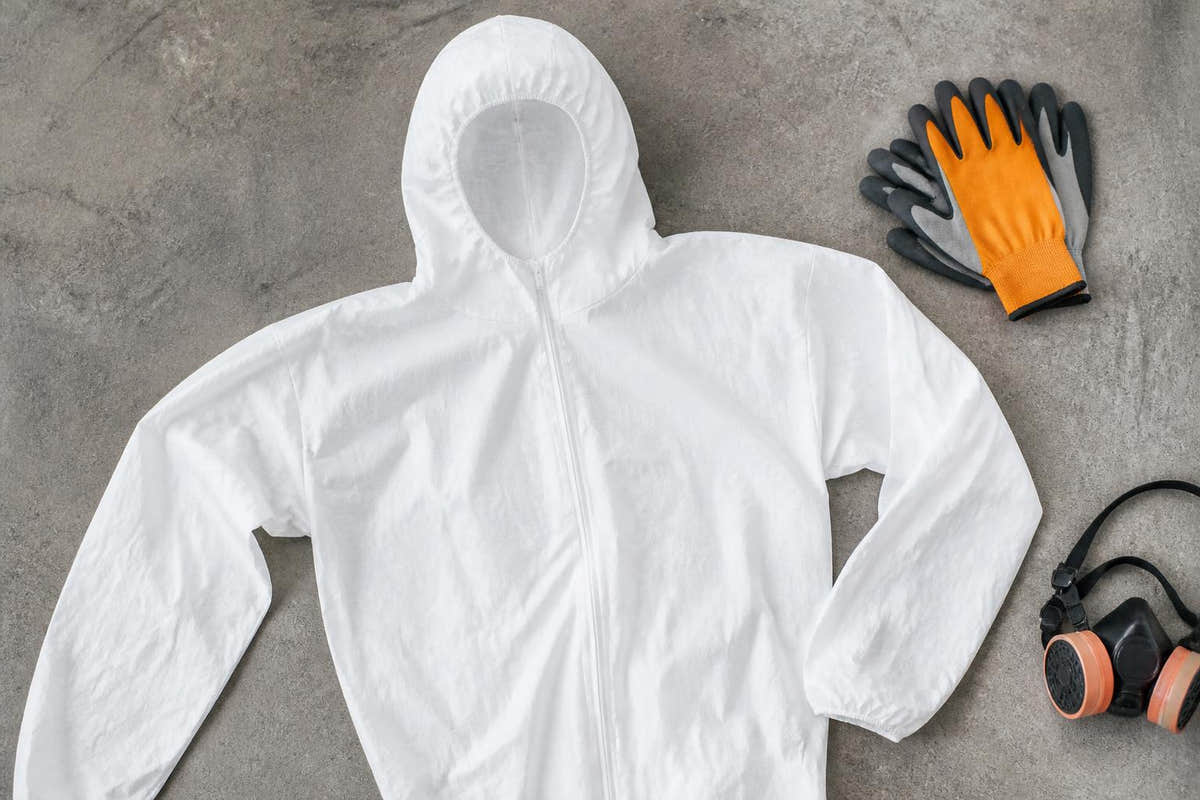
When you are choosing coveralls for asbestos removal work, the main point is simple. You need a garment that helps stop fibres settling on the worker’s ordinary clothing and reduces contamination on the skin, while working properly with the rest of the PPE being used on site. In practice, that usually means task-specific disposable coveralls with the right hood, cuff, zip and seam details, not standard workshop overalls or general site clothing.
It is also worth being clear about limits. Asbestos coveralls are one control measure, not a complete answer on their own. In UK asbestos work, the coverall has to fit the task, the method statement, the decontamination process and the rest of the PPE, including respiratory protection, gloves and footwear. Buying the right garment matters, but so do correct use, careful removal and proper disposal.
What coveralls are for in asbestos work
In asbestos work, coveralls are there to act as a barrier between asbestos fibres and the worker’s own clothes and body. If fibres settle on everyday clothing, they can be carried into welfare areas, vehicles or homes. That is exactly what controlled asbestos work is trying to prevent.
The coverall also makes decontamination more manageable. A disposable outer layer can be removed as part of the site procedure, reducing the chance that contaminated dust is transferred elsewhere. For licensed work, notifiable non-licensed work and some short duration lower risk tasks, the exact level of control depends on the material, the condition it is in, and the work method being used. The coverall still serves the same basic purpose, which is containment of contamination on the person.
That said, no one should treat coveralls as a stand-alone safeguard. They sit within a wider PPE and control system that may include a suitable respirator, gloves, boots without laces where required by site rules, and where applicable a full decontamination set-up. Coveralls do not replace enclosure, wet removal techniques, shadow vacuuming, controlled waste handling or the legal duty to assess the work properly under UK asbestos regulations.
In the UK, asbestos work is governed principally by the Control of Asbestos Regulations 2012. The practical expectation on site is not just that workers wear PPE, but that the PPE is suitable, maintained, used correctly and matched to the risk assessment. So when we talk about asbestos coveralls, we are talking about a garment chosen as part of a task-specific system, not a generic one-piece suit for messy jobs.
Which coverall features matter most
For asbestos work, the most useful coverall features are usually straightforward and practical.
First, disposable construction matters. A disposable garment reduces the problem of laundering contaminated clothing. Reusable workwear can be right for many trades, but asbestos work is not the place for ordinary wash-and-wear site kit. If a garment is intended for single-use contamination control, that should be clear in its specification.
Second, a hood is important. The hood needs to work with the chosen respirator and sit close enough to reduce gaps, without pulling loose when the wearer turns their head. A badly shaped hood can interfere with the face seal area or leave exposed areas around the neck and jaw. It also needs to stay in place when the worker is bending, reaching and kneeling.
Third, look closely at cuffs and ankles. Elasticated cuffs help create a closer interface with gloves, and elastic at the ankle helps keep the leg in place over footwear. The aim is not to create a complicated, uncomfortable seal that fails in use, but to reduce openings where dust can enter or settle on underlying clothing.
A covered zip is another key detail. An exposed zip line is a weak point for contamination. A storm flap or self-adhesive zip cover helps protect that opening. Seam design matters for the same reason. Well-finished seams are preferable to rough construction that can split under movement. In practical buying terms, this means checking the product description carefully rather than assuming all disposable suits are built to the same standard.
Fit is just as important as material details. If the coverall is too tight across the shoulders, crotch or knees, it is more likely to tear during work. If it is too loose, it can snag, drag underfoot or interfere with other PPE. The right fit needs enough room for movement and any necessary layering, but not so much excess fabric that the garment becomes awkward.
Compatibility with other PPE should be checked before purchase. The coverall has to work with gloves, respiratory protection, and footwear. On some jobs, workers may also be using additional outer layers for weather or transit between areas, but those layers are not a substitute for the task-specific disposable suit. If you are comparing broader options for one-piece workwear, our guide to coveralls for different site jobs is useful background, but asbestos work needs a more controlled approach than ordinary site use.
Why ordinary workwear is not enough
Everyday overalls, trade coveralls and workshop clothing are made for durability, comfort and protection against general dirt, grease and wear. They can be excellent for mechanics, maintenance teams, decorators, warehouse staff and outdoor site work. They are not automatically suitable for asbestos tasks.
The main problem is contamination control. Standard workwear is often designed to be worn repeatedly, taken home or laundered conventionally. That is the opposite of what you want where asbestos fibres may be present. Pockets, heavy stitching, open fronts and absorbent fabrics can all make contamination harder to manage. Details that are useful in general work, such as multiple external compartments or holster pockets, are not what you want on asbestos removal work because they create more places for dust to collect.
Ordinary coveralls may also lack the close-fitting hood, cuff and zip protection expected for this type of task. A cotton drill overall, for example, might be hard-wearing and comfortable, but it is built for general wear, not for controlled removal and disposal after contamination risk. The same applies to a thermal coverall for winter weather, a waterproof shell for wet work, or a softshell layer used for outdoor comfort. Those garments have their place, but not as the primary contamination control garment in asbestos work.
It is also worth separating visibility or weather needs from asbestos protection needs. Hi-vis clothing helps workers be seen. A bodywarmer adds warmth. Waterproof outerwear keeps rain off. None of those functions means the garment is suitable for asbestos work. If a task needs both visibility and asbestos controls, the site system has to address both requirements without assuming one garment does everything.
In UK practice, this distinction matters because employers and contractors have to justify their controls. Saying that a worker wore overalls is not enough. The question is whether the clothing was suitable PPE for the actual asbestos task. That is a higher bar than simply being covered up for a dusty job.
How to choose the right size and fit
Sizing is often treated as an afterthought, but with asbestos coveralls it directly affects usability and safety on site. A disposable suit that is awkward to move in is more likely to be damaged, adjusted repeatedly or worn incorrectly.
Start with the manufacturer’s published size chart on the live product page. Chest size is usually the first check, but it should not be the only one. Height matters because it affects body length, sleeve reach, hood position and whether the crotch sits correctly when the worker bends or kneels. If the body length is too short, the suit can pull at the shoulders and crotch and may tear under strain.
Think about movement, not just static measurements. The wearer should be able to squat, climb a short ladder, reach forward and work overhead without the coverall binding badly. In asbestos work, people often spend time kneeling, crawling into restricted spaces or handling wrapped waste. That means extra room through the seat, thigh and shoulder area is useful, but not so much that the garment becomes baggy and catches.
Layering is another practical point. If the work is being done in a cool environment, workers may need a base layer underneath. That should be allowed for when choosing size. Buying too close a fit on the assumption that disposable coveralls should be skin-tight usually backfires. At the same time, sizing up too far can make the hood unstable and the legs too long.
Inside leg is easy to overlook, but it affects safety and comfort. If the leg is too short, the ankle can ride up when kneeling and expose clothing or skin above the boot. If it is too long, excess fabric can bunch around the ankle and become a trip point. Product pages for general workwear often list inside leg options because fit is a major buying factor. Where asbestos PPE sizing is less detailed, it is still worth checking the published dimensions and asking whether the cut is intended to fit over clothing or close to the body.
Women buyers should be especially careful not to assume that unisex sizing will always work well. A poor fit across the chest, hip or rise can make a disposable coverall much less usable. Although it is written for broader workwear rather than asbestos tasks, our guide to coveralls that fit women properly covers the fit issues worth checking before ordering.
Use, removal and disposal on site
Correct use on site matters as much as product selection. A well-chosen coverall can still fail in practice if it is put on carelessly, damaged during the job or removed in a way that spreads contamination.
Before use, inspect the coverall for damage. Check the zip runs properly, the hood is intact, the cuffs are sound and there are no tears at the seams. Put the coverall on in the clean area or the designated changing area set by the site procedure. Fasten it fully, including the zip flap if there is one, and make sure it sits correctly with gloves, footwear and respiratory protection.
During the job, avoid unnecessary adjustments once the work has started. Tugging at sleeves, opening the front for comfort or pulling the hood back in the work area creates opportunities for contamination. If the coverall is torn or heavily contaminated, follow the site procedure for replacement rather than trying to patch on with unsuitable tape or continue working in a damaged garment unless the method statement specifically allows for a controlled repair.
Removal is the stage where contamination is easily spread. In UK asbestos work, the exact process depends on whether the work is licensed, notifiable non-licensed or non-licensed, and on the decontamination arrangements in place. The basic principle is consistent. Remove the contaminated outer layer carefully, turning it inward as far as possible and avoiding actions that shake dust into the air. Gloves are usually removed or changed in a controlled sequence, and respiratory protective equipment is removed only at the correct stage of the decontamination process.
Disposal should follow site waste procedures and current UK rules for asbestos-contaminated waste. Used disposable coveralls from asbestos work should not go into general waste. They need to be treated as asbestos waste where contamination is present or suspected, bagged and labelled in line with the site’s waste handling procedure and the applicable legal requirements. In the UK, that often means red inner and clear outer asbestos waste bags, or other approved site systems, with disposal through the proper hazardous waste route. Rules and handling arrangements can differ from general EU practice, so UK dutyholders should follow current UK legislation and HSE guidance rather than relying on a generic European approach.
Workers should also be trained on the removal sequence. Even the best asbestos coveralls cannot do their job if the wearer strips them off quickly in a dirty area and walks away in contaminated boots.
What to check before you buy from 100 Percent Workwear
When you are buying from 100 Percent Workwear, start with the live product page and read it closely. Check whether the item is described as general workwear or as task-suitable PPE for contamination control. That sounds obvious, but it is the easiest way to avoid ordering standard overalls for a specialist job.
Look for the published specification. For asbestos-related tasks, that means checking whether the product is disposable, whether it has a hood, what kind of cuffs and zip covering it uses, and what sizing information is actually listed. Do not assume features from the product photo alone. Product imagery helps, but the written specification is what you should rely on.
Availability matters too. If you need a consistent suit across a team, confirm that the required sizes are in stock before planning the job around that product. If the page shows size options, review each one carefully rather than assuming all sizes are available at once. Fleeta Limited operates 100 Percent Workwear as a live UK online shop, so stock and published range can change.
It is also worth checking whether the item sits in a broader workwear category or is clearly intended as PPE. Our coveralls and overalls range includes garments for different site uses, and not every one-piece garment in that category will be appropriate for asbestos work. Some are aimed at general trade use, some at weather protection, and some at other hazards entirely. For example, if you are comparing garments for heat and ignition risks on other jobs, our guide to flame-resistant coveralls for site work explains why hazard-specific selection matters. The same principle applies here.
Finally, keep the job in view. Buy for the actual task, not for the broad label of coverall. Asbestos work needs suitable PPE, correct fit, careful use and proper disposal. If the live product page does not clearly give you the specification, sizing or suitability information you need, verify it before ordering. That is the practical way to choose coveralls that are fit for the work, and to avoid confusing ordinary site clothing with asbestos coveralls meant for controlled use.
Are asbestos coveralls the same as normal work coveralls?
No. Everyday work coveralls are general clothing, while asbestos tasks usually require task-specific disposable PPE chosen to suit the job, the other equipment used and current HSE guidance.
Should asbestos coveralls be disposable?
For many asbestos tasks, disposable hooded coveralls are commonly used to reduce contamination and simplify disposal. The exact choice should follow the job method, product instructions and site controls.
What type of fit is best?
The best fit allows movement without being baggy enough to snag or tight enough to split. It also needs to work properly with gloves, footwear and respiratory protection.
Can I wash and reuse asbestos coveralls?
Do not assume they can be reused. Many coveralls used for asbestos work are intended for single use and controlled disposal. Follow the manufacturer instructions and your site procedure.
Do coveralls on their own make asbestos work safe?
No. Coveralls are only one part of control measures. Safe asbestos work depends on the task, training, respiratory protection, decontamination procedures and current legal guidance.